Hospitality Beyond Borders
10 Factors to Consider When Planning an Outdoor Event
An outdoor event can be a really great change from the typical kind of meeting. Find out the 10 factors you need to consider when planning your next outdoor event.
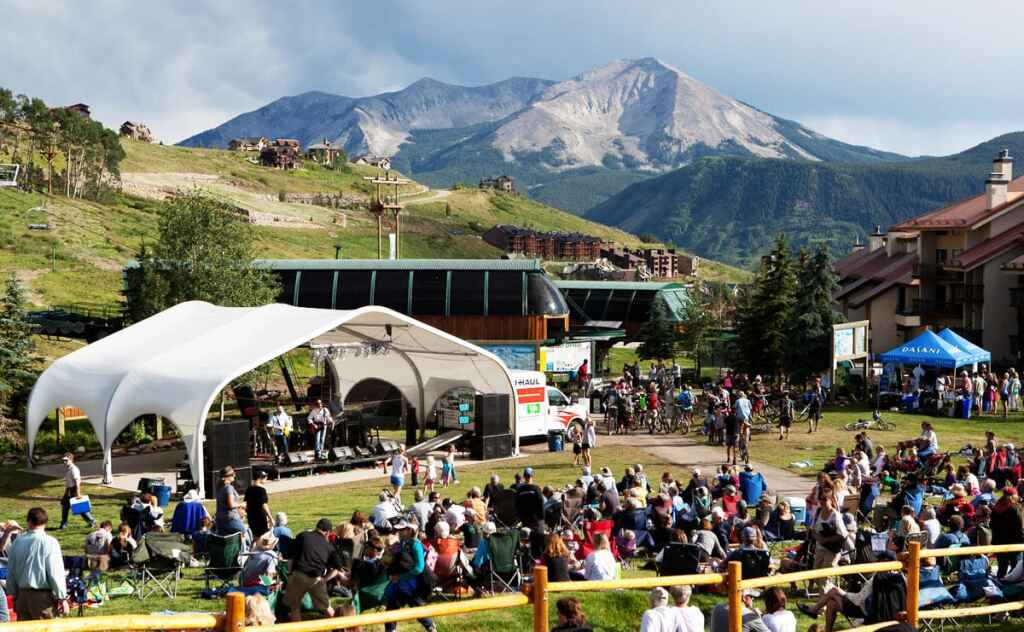
When you think about outdoor events, you probably think of: festivals, fairs, and sunny days packed full of fun and great memories.
What you may not think of: professional meetings and conferences can also benefit from fresh air, increased capacity, and ease of access. Not to mention the freedom you have to lay out your maps and activate different spaces. No walls, no limitations!
Outdoor settings can be a great way to level up all types of events, like:
- Company all-hands
- Executive retreats
- Networking sessions
- Team-building events
- Marketplaces or exhibitor spaces
- Fundraisers
- Education and workshops
- Galas
And a ton of others, too!
But, let’s be honest. When you think about outdoor events, you might also think: risk.
Indoor venues often come pre-planned, with reliable processes, tons of amenities, and no question of rain or shine. Outdoor events need to be planned to T to ensure that there aren’t any surprises for your staff or attendees—but don’t worry.
With these ten considerations, you’ll be ready to conquer risk and say hello to the great outdoors.
1. Have a back-up planSounds basic enough but this fundamental is frequently ignored. Rain dates for outdoor events used to be common practice. Due to the difficulty in coordinating schedules, they have fallen out of favor. It may be time to revive this practice as nothing dampens the spirits more than spending time outdoors getting drenched.
Recommended Resource: Are you planning an in-person event with outdoor activities?
Download the free eBook, Experience Design: The Complete Guide to Creating Memorable Events and learn how to design a memorable experience that meets your event goals🏆.
Great examples include an outdoor venue that has a chalet, an indoor amphitheater, or an auditorium. Reserve that space and use it as your backup in case of rain.
A couple of times, my company has planned beach dinners for corporate events in sun destinations. Unfortunately, hotels and resorts aren’t able to “spin on a dime”. Twice we were able to select indoor venues without a 4th wall. This provided a great view of the outdoors so participants got the best of both worlds and remained dry. – Anne Thornley-Brown specialist in Executive Retreats
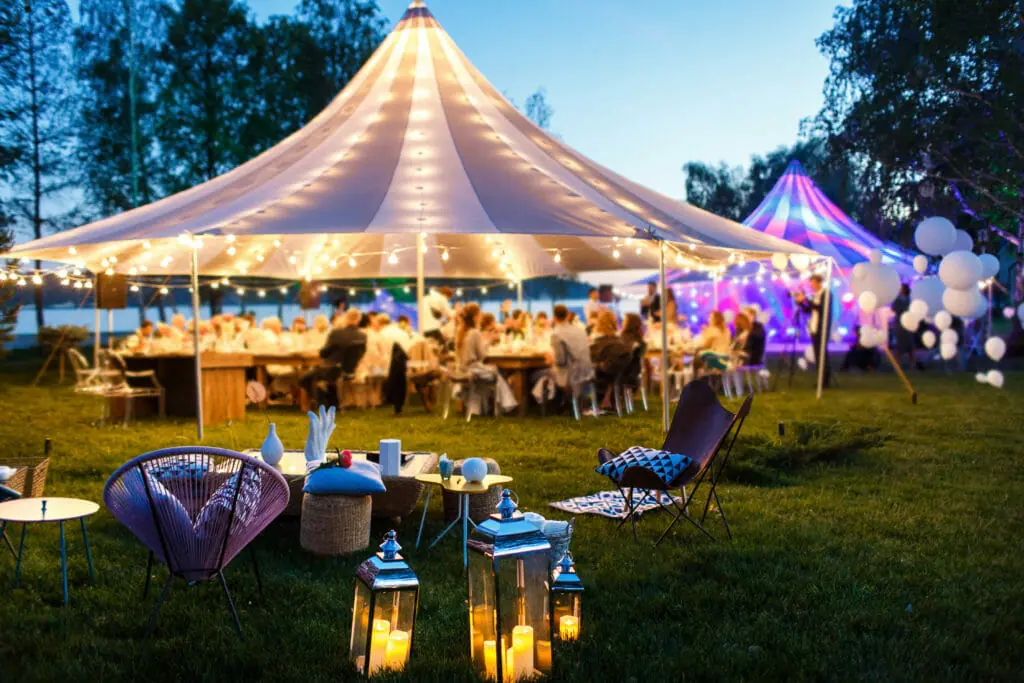
4. Be sure to make arrangements for protective coverThe expression “run for cover” is often used to refer to the reaction to a sudden downpour. On hot days or in locations with extreme temperatures, like the desert, providing cover and protection from the sun is just as important.
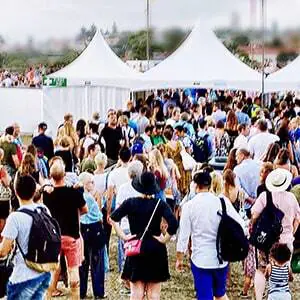
Consider canopies over tables or a marquee. Remember, marquees cannot be ordered at the last minute. Event planners need to order them in advance and they need to be set up and ready to go.
6. During transitional seasons, ask participants to come prepared for changes in weather conditions
Gallery

Related content
Interdum et malesuada fames